


When selecting window treatments in Palm Beach County for your home or office, horizontal blinds and vertical blinds are two of the most common and versatile options. Each offers distinct aesthetic qualities and functional benefits, making them suitable for different window sizes, room styles, and personal preferences.
Understanding the key differences between horizontal blinds and vertical blinds is crucial for making an informed decision that meets your light control, privacy, and design needs.
Horizontal Blinds are the Classic Choice
Horizontal blinds feature slats that run horizontally across the window. These slats can be tilted open or closed to control the amount of light entering the room and the level of privacy. They can also be raised or lowered to provide a completely unobstructed view.
Types of Horizontal Blinds
Aluminum Mini Blinds:
A budget-friendly and durable option, often used in offices and rental properties. They come in various colors and slat widths.
Faux Wood Blinds:
Made from composite materials, these blinds offer the look of real wood but are more moisture-resistant and often more affordable. Ideal for kitchens and bathrooms.
Real Wood Blinds:
Provide a warm and classic aesthetic. They are available in various wood types and finishes but can be more expensive and susceptible to moisture damage.
Venetian Blinds:
A general term for horizontal blinds with slats typically ranging from 1/2 inch to 2 inches wide.
Pros & Cons of Horizontal Blinds
Horizontal Blind Benefits:
Excellent Light Control: The tilting slats allow for precise adjustment of light levels, from fully open to completely closed.
Good Privacy Control: When closed, they offer a high degree of privacy. The overlapping slats minimize gaps.
Versatile Style: Available in a wide range of materials, colors, and slat sizes to suit various décor styles.
Relatively Affordable: Aluminum mini blinds and faux wood blinds are generally cost-effective options.
Easy to Operate: Simple lift cords or wands allow for easy raising and lowering, and tilt wands or cords control the slats.
Cons of Horizontal Blinds
Can Obstruct View When Raised: When fully raised, the stacked slats can take up a significant portion of the window, obstructing the view.
Can Be Dusty: The horizontal slats can accumulate dust easily and require regular cleaning.
More Slats to Clean: Cleaning multiple horizontal slats can be more time-consuming than cleaning vertical slats.
Not Ideal for Very Wide Windows: For very wide windows, horizontal blinds can become heavy and cumbersome to operate. The weight can also cause the headrail to sag over time.
Can Be Noisy in Breezy Conditions: Loose or improperly installed horizontal blinds can rattle in a breeze.
Understanding Vertical Blinds
Vertical blinds feature slats that hang vertically from a track at the top of the window. These slats can be rotated to control light and privacy and can be drawn to the side to provide a full view.
Types of Vertical Blinds
PVC/Vinyl Vertical Blinds:
A durable, moisture-resistant, and affordable option, often used for sliding glass doors and large windows.
Fabric Vertical Blinds:
Offer a softer look and feel compared to PVC. They come in various fabrics, textures, and colors.
Aluminum Vertical Blinds:
Lightweight and durable, offering a sleek and modern aesthetic.
Wood or Faux Wood Vertical Blinds:
Provide a more upscale look for large windows and sliding doors, coordinating with horizontal blinds in other areas.
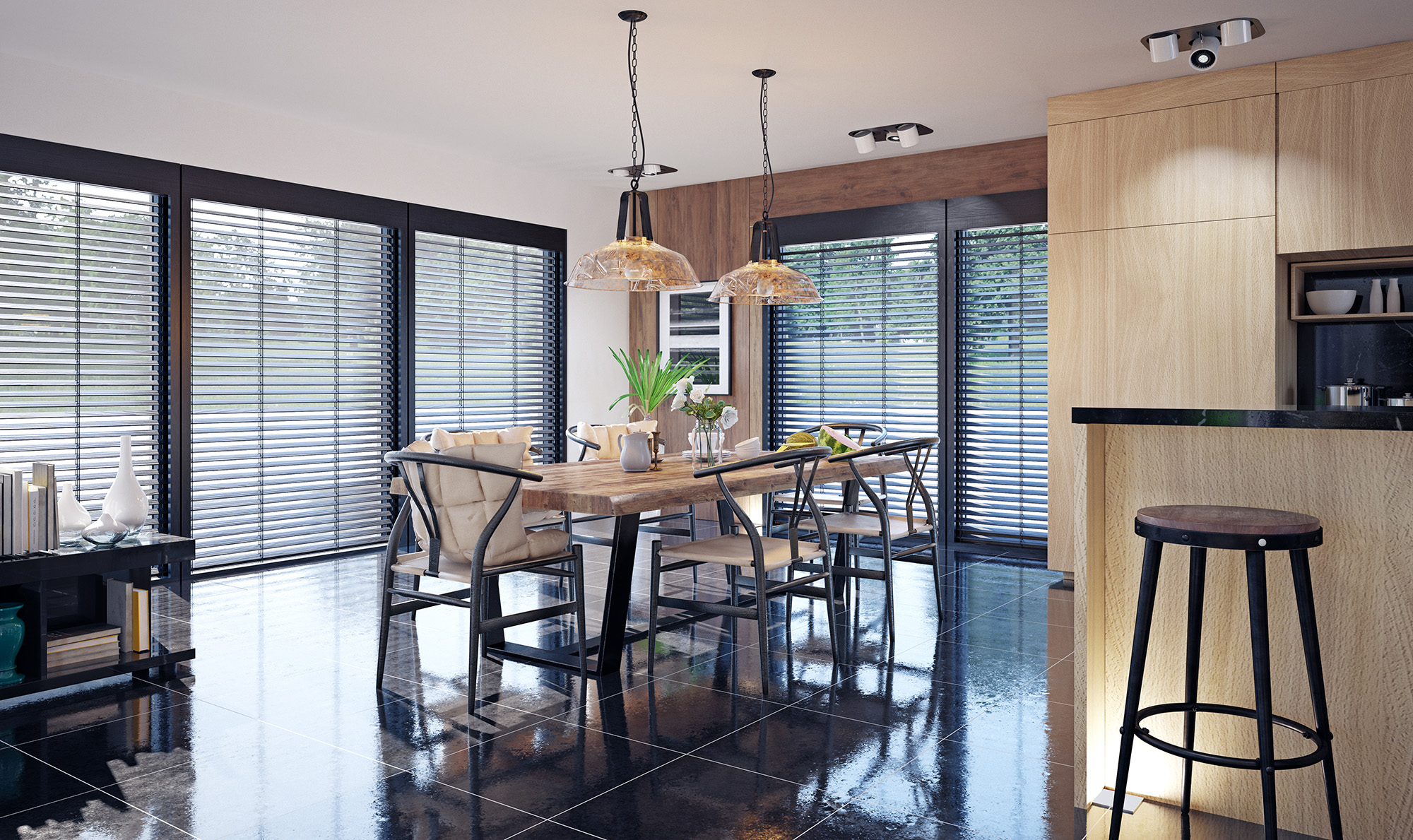
Understanding the Advantages & Disadvantages of Vertical Blinds
Pros of Vertical Blinds
Ideal for Large Windows and Sliding Doors: Their vertical orientation makes them well-suited for covering wide expanses.
Good Light and Privacy Control: Rotating the vertical slats allows for adjustable light and privacy levels.
Easy to Clean: The vertical slats tend to accumulate less dust than horizontal slats, and they are easier to wipe down.
Unobstructed View When Open: When drawn to the side, they offer a completely unobstructed view.
Less Likely to Rattle: The vertical orientation generally makes them less prone to rattling in a breeze.
Cons of Vertical Blinds
Can Be Less Precise in Light Control: Adjusting light precisely by rotating the wider vertical slats can sometimes be less nuanced than tilting narrow horizontal blinds.
Can Stack Unevenly When Open: Depending on the quality and mechanism, the vertical slats may not always stack neatly when fully open.
Can Be More Prone to Damage: The long, hanging slats can sometimes be bumped or snagged, potentially leading to damage.
Style Can Be Perceived as More Traditional or Office-Like: While available in modern styles, vertical blinds are sometimes associated with more traditional or commercial settings.
Key Differences Between Horizontal vs Vertical Blinds
|
Feature |
Horizontal Blinds |
Vertical Blinds |
|
Slat Orientation |
Horizontal |
Vertical |
|
Best For |
Standard windows |
Large windows, sliding doors |
|
Light Control |
Precise tilting of narrow slats |
Rotation of wider slats |
|
Privacy Control |
Excellent when closed |
Good when rotated closed |
|
View Obstruction (Open) |
Can obstruct view when stacked |
Fully unobstructed when drawn aside |
|
Dust Accumulation |
More dust on horizontal surfaces |
Less dust on vertical surfaces |
|
Cleaning |
More slats to clean |
Easier to wipe down fewer slats |
|
Noise in Breeze |
More prone to rattling |
Less prone to rattling |
|
Style Perception |
Generally more residential |
Can be more traditional/office-like |
|
Operation |
Lift cords/wands, tilt cords/wands |
Draw cord/wand, rotate wand |
Choosing the Right Window Treatment for Your Needs
When deciding between horizontal blinds and vertical blinds, consider the following factors:
Window Size and Shape:
Vertical blinds are generally the preferred choice for wide windows and sliding glass doors, while horizontal blinds are well-suited for standard-sized windows.
Light Control Needs:
If precise control over light intensity is crucial, horizontal blinds with their narrow, tilting slats offer an advantage.
Privacy Requirements:
Both offer good privacy when closed, but the overlapping slats of horizontal blinds can provide a slightly tighter seal.
Desired Style:
Consider the overall décor of the room and whether the horizontal or vertical orientation aligns better with your aesthetic preferences.
Ease of Cleaning:
If low maintenance is a priority, vertical blinds tend to accumulate less dust and are easier to wipe clean.
View Preservation:
If maintaining an unobstructed view when the blinds are open is important, vertical blinds that can be fully drawn aside are the better option.
Budget:
Consider the cost of materials and installation for both types, as prices can vary depending on the material and size.
Find the Ideal Blend of Function and Style with Capitol Carpet & Tile and Window Fashions®
Both horizontal blinds and vertical blinds are practical and stylish window treatment options that offer effective light and privacy control. The best choice for your space depends on a careful consideration of your specific needs, the size and type of your windows, your stylistic preferences, and your budget. By understanding the distinct characteristics, pros, and cons of each, you can select the window treatment that provides the ideal blend of function and style for your home or office.
Contact Capitol Carpet & Tile and Window Fashions® to explore our extensive selection of window treatments. We have showroom locations in Boca Raton, FL, Boynton Beach, FL, Wellington, FL, Palm Beach Gardens, FL, and Delray Beach, FL. We service the areas of Palm Beach, Broward & Martin Counties.


